



Industrial Furnaces Guide for Modern Manufacturing Types Uses
Industrial furnaces play a vital role in modern manufacturing, enabling precise heat treatment, metal processing, and material transformation across industries. From automotive and aerospace to electronics and heavy engineering, these furnaces ensure strength, durability, and performance in finished products. This guide explores what industrial furnaces are, how they work, their types, and their importance in today’s manufacturing landscape.
What Is an Industrial Furnace?
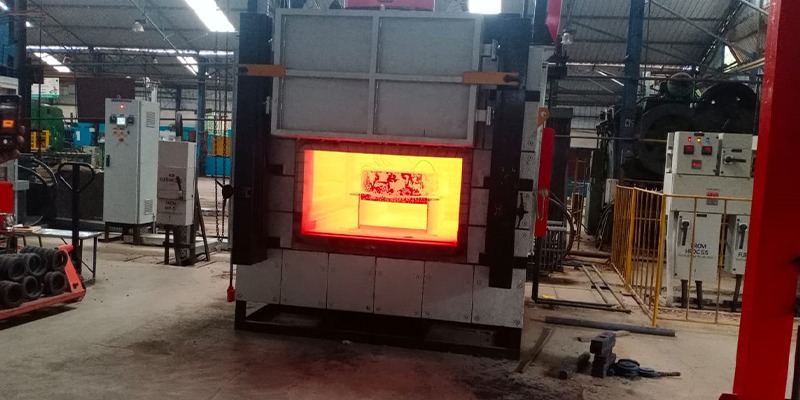
An industrial furnace is a high-temperature heating system designed to heat, melt, or treat materials under controlled conditions. Unlike domestic furnaces, industrial furnaces operate at extremely high temperatures and are built to handle continuous production, heavy loads, and strict quality requirements.
They are commonly used for processes such as annealing, hardening, tempering, carburizing, nitriding, melting, and heat soaking.
Why Industrial Furnaces Are Essential in Modern Manufacturing
Industrial furnaces are critical because they:
-
Improve material strength and durability
-
Enhance wear resistance and fatigue life
-
Ensure uniform heating and consistent results
-
Support mass production with high efficiency
-
Meet industry-specific quality and safety standards
Without precise heat treatment, many metal components would fail to meet performance and safety requirements.
Types of Industrial Furnaces and Their Applications
Modern manufacturing uses a wide range of industrial furnaces, each designed for specific processes and production needs.
Box Type Furnaces
Used for batch heat treatment processes like annealing and tempering. Ideal for small to medium-sized components.
Bogie Hearth Furnaces
Designed for heavy and large components, commonly used in automotive, railways, and heavy engineering industries.
Pit Type Furnaces
Suitable for long or vertically mounted components. Often combined with quenching tanks for hardening applications.
Roller Hearth Furnaces
Used for continuous production lines where uniform heating and high throughput are required.
Mesh Belt Furnaces
Ideal for continuous heat treatment of small parts, offering consistent temperature control and automation.
Vacuum Furnaces
Operate in a controlled vacuum environment, preventing oxidation and ensuring high-precision heat treatment.
Salt Bath Furnaces
Used for rapid and uniform heating in hardening and tempering processes.
Melting Furnaces
Designed for melting metals such as aluminium, copper, brass, zinc, and other alloys.
Common Heat Treatment Processes in Industrial Furnaces
Industrial furnaces support a variety of heat treatment processes, including:
-
Annealing: Improves ductility and reduces internal stress
-
Hardening: Increases strength and wear resistance
-
Tempering: Enhances toughness after hardening
-
Carburizing: Adds surface hardness to steel components
-
Nitriding: Improves surface hardness and fatigue strength
-
Solutionising: Used mainly for aluminium alloys to improve mechanical properties
Each process requires precise temperature control and consistent furnace performance.
Key Components of an Industrial Furnace
A modern industrial furnace consists of:
-
Heating elements or burners
-
High-quality refractory insulation
-
Temperature control and monitoring systems
-
Loading and material handling systems
-
Safety and automation controls
Advanced furnaces integrate PLC-based controls for accuracy, energy efficiency, and process repeatability.
Industries That Rely on Industrial Furnaces
Industrial furnaces are widely used across:
-
Automotive and auto components
-
Aerospace and defense
-
Steel and metal processing
-
Electrical and electronics
-
Foundries and casting units
-
Heavy engineering and infrastructure
Each industry depends on furnaces to meet strict performance and quality standards.
Factors to Consider When Choosing an Industrial Furnace
When selecting an industrial furnace, manufacturers should consider:
-
Type of material and process required
-
Maximum operating temperature
-
Batch or continuous operation
-
Energy efficiency and operating cost
-
Automation and control features
-
Compliance with industry standards
Choosing the right furnace ensures long-term reliability and consistent production quality.
Future of Industrial Furnaces in Manufacturing
With Industry 4.0 and sustainability goals, modern industrial furnaces are evolving to become:
-
More energy-efficient
-
Digitally monitored and automated
-
Environment-friendly with lower emissions
-
Custom-designed for specific applications
These advancements help manufacturers improve productivity while reducing operational costs.